
Crossface Conventions Handbook
The translation key to a better Player's Handbook

Hello,
The intention of this document is to get my thoughts down on paper about how to find Dungeons and Dragons within the Fifth Edition. A portion of the inspiration for doing this is in no small part due to the work Alchemic Raker is doing. He and I have spoken, not necessarily at length, but multiple times about this particular subject. For this article I will solely be focused on The Player's Handbook.
My intent is to have this be used in conjunction with the core text. This article is not to persuade your opinion one way or another when it comes to Fifth Edition. If you do not own Fifth Edition, I am not telling you to go buy it. The goal of this article is for those who already own the game, and are looking for a different experience.
Years ago, I wrote down a lot of stuff that would improve Fifth Edition and played it at multiple tables. While I will not be providing the entirety of the rules that I had written back then, I will be presenting some ideas that will dovetail with the core text itself. That being said, these rules will not aim to replace the core text, but will be used as a translation key for a certain way to play.
In order to keep myself organized, I will be following the same layout as the Players Handbook. If at times my train of thoughts come off as rambling rants, I apologize. I have many things swimming in my head with this subject in particular. So I will be typing out my thoughts as I flip through the book. It is recommended that you use the Player's Handbook alongside this article. I will attempt to provide images as best as I can, but nothing will replace the necessity of owning the physical game.
The majority of the rules will be derived from the Player's Handbook (this article) and Dungeon Master's Guide (future article). The intention will be to stay close to the rules while massaging some areas that transform Fifth Edition into a different experience than the current wotc editions. Additional information will come from Xanathar’s Guide to Everything.
There will be some areas where I will be providing completely new rules, and much to the ire of Rule of Thule, I will provide other areas with a couple options. Whenever I do provide more than 1 option, I will mention my preferred method.
HOW TO PLAY
Now to start, a change that I propose comes as early as page 7. Advantage and Disadvantage. We will be changing that to mean +2/-2, with the ability to stack. This means that someone with double advantage will receive +4 to the roll. I am aware this is a core philosophical change in how Fifth Edition works, but that is why we are here in the first place.
CHAPTER 1: CREATING A CHARACTER
Step 1
Step 1 in Fifth Edition is to Choose a Race. We will be rolling our ability scores first. There are a few sufficient ways to do this:
Roll 4d6, recording only the highest 3. The scores are assigned in order.
Roll 3d6 for each ability. Record them in order. Repeat this 1-2 times. Keep the set you prefer. (The entire set.)
Roll 3d6 for each ability and arrange to taste.
I typically will use Method 2 listed here.
Step 2
Step 2 for us will be determining our Race. You are free to worldbuild how you like. However, for the sake of these conventions, I will give my preference.
Dwarves
Elves
Halflings
Humans
Drow and Duergar are also not Player Character options.
The racial bonuses will be slightly altered, so pay attention to that when we come across it.
Step 3: Choose a Class.
I do not have class restrictions as a core doctrine of this project, however, Alchemic Raker has put out some stuff on this, or alternatively, you can use the chart on page 163 to have the requirements needed to be in a class.
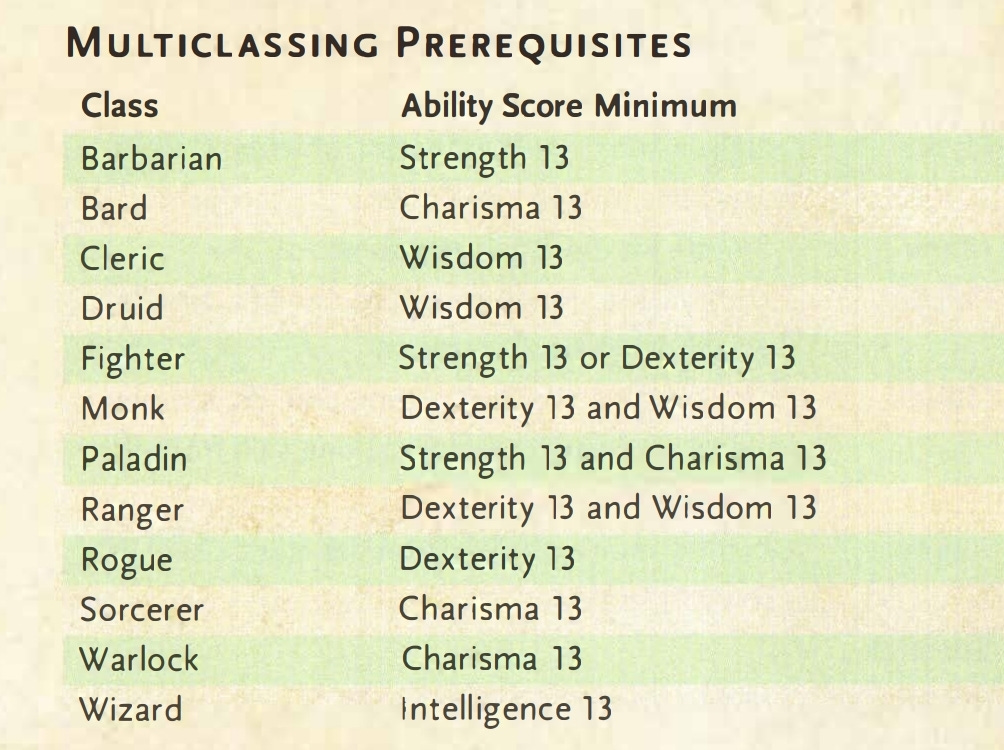
I do think there should be some limitations when it comes to spellcasting classes though. You can approach it how you wish. My recommendation is to remove classes like sorcerer altogether. In the past, I have offered the following classes:
Cleric
Fighter
Paladin
Rogue
Wizard
Optionally:
Barbarian
Druid
At your discretion, you may add in classes on a situation-by-situation basis. My good friend Oghma has never played a Warlock, and I told him I would make an exception for him. He did quickly reference Lord Dunsany as inspiration, so he will get the pass.
While choosing your class, do not write down the equipment associated with that portion of character creation. We will be rolling for our starting gold and buying our equipment.
Starting Hit Points will be rolled. The technique that I prefer when rolling starting HP for a game like Fifth Edition, is to roll 2 times and take the preferred 1. If both times you end up with 1hp on the die roll, then accept fate and roleplay accordingly. I have had multiple players roll 1 starting out and level up.
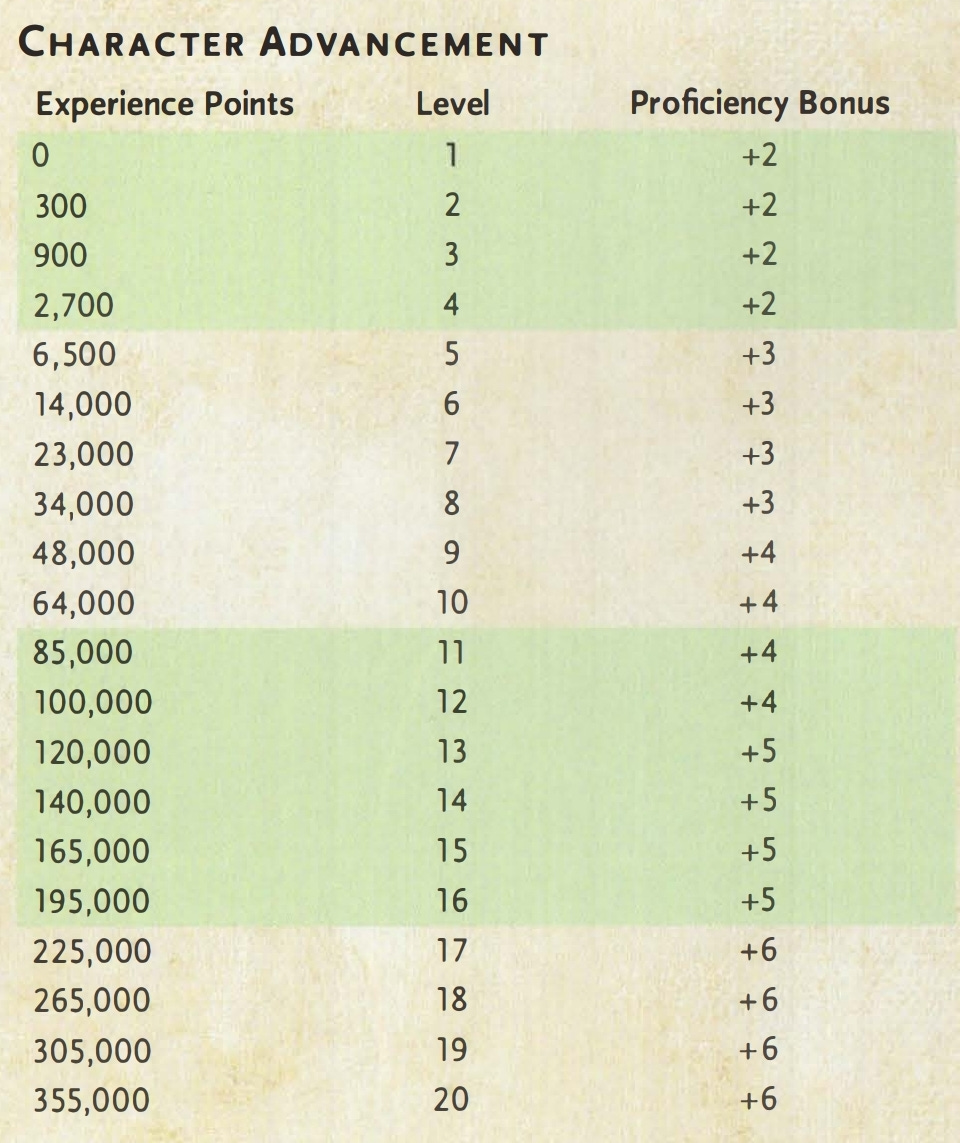
Proficiency bonus: this is probably the most controversial change that I will suggest. All listed Proficiency bonuses should be cut down by -2. This means that starting out, the proficiency bonus will be +0. I will not elaborate on this much, as I feel this is a crucial step to defeating the game-warping number bloat that 5e suffers. (Lack of proficiency will result in a -2 penalty).
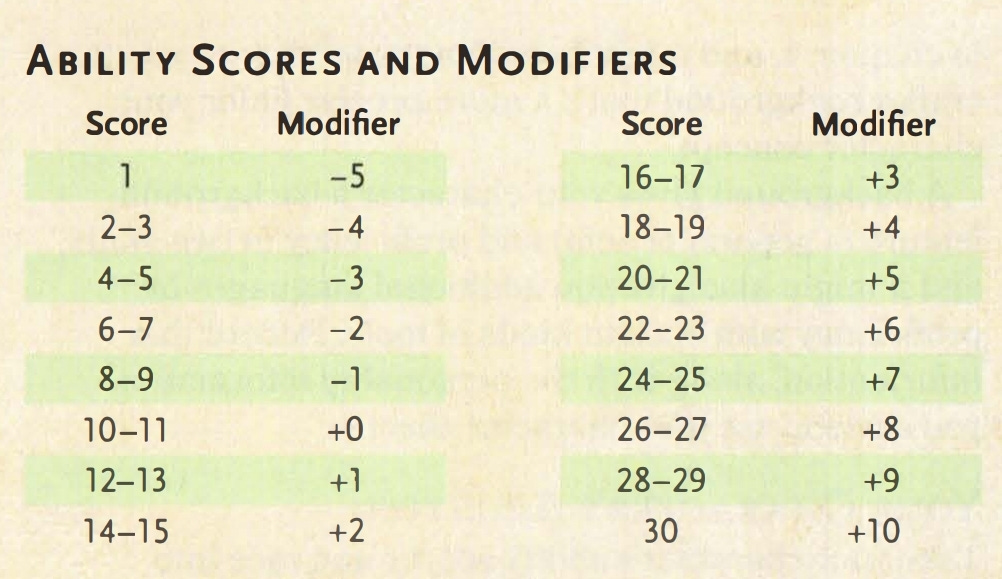
Step 3 in the book is Determine Ability Scores. We have already talked about that in Step 1. I will note however that the modifiers will remain untouched
Step 4: Describe Your Character
This can largely stay the same. However, I do recommend rolling randomly to determine the background. Backgrounds will not grant bonus languages or equipment.
For the ease of rolling randomly, I will provide a list below. These are in the order they appear in the book. Descriptions start on page 127.
Acolyte
Charlatan
Criminal
Spy
Entertainer
Gladiator
Folk Hero
Guild Artisan
Guild Merchant
Hermit
Noble
Knight
Outlander
Sage
Sailor
Pirate
Soldier
Urchin
Step 5: Choose Equipment
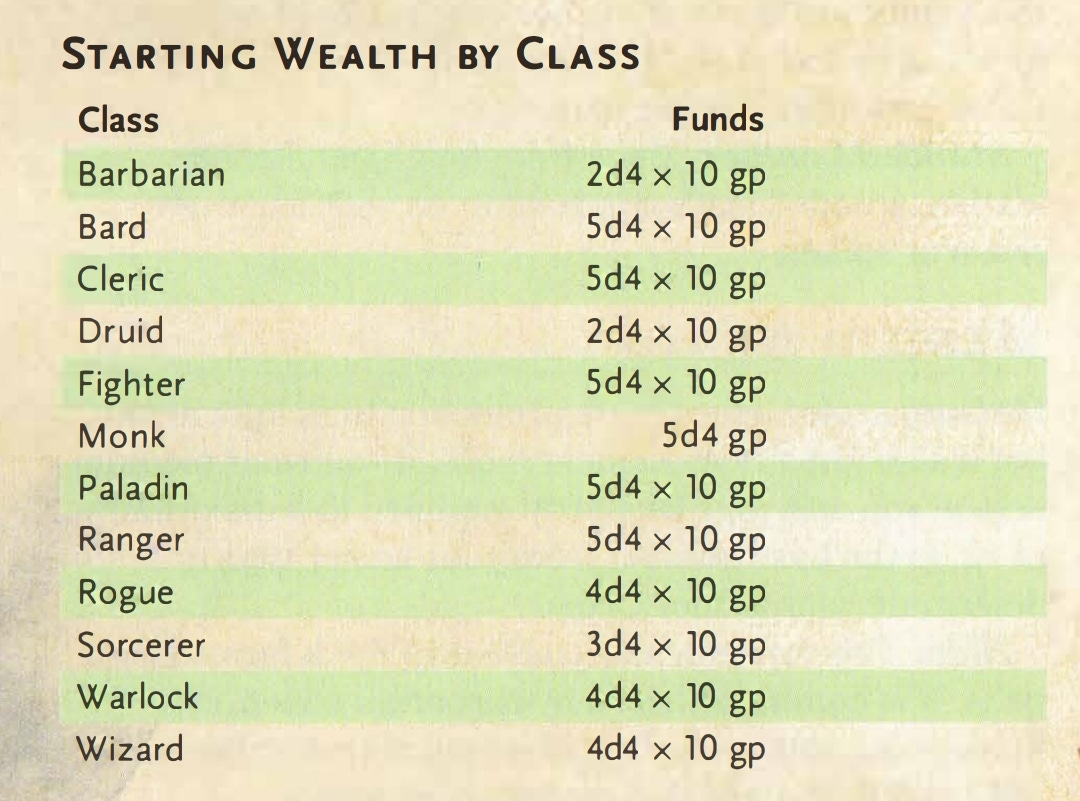
As noted earlier, we will not be choosing equipment. I feel it is a core play pattern in traditional D&D to roll for starting wealth and purchase your own equipment. If you are in a time crunch you may opt to choose equipment, but it is highly discouraged.
To roll for starting wealth you can turn to page 143 and use that chart to determine the amount of gold you have. I have always fallen into the habit of rolling 3d6 x 10. Which you can still opt for. However, for the sake of starting out and this project, I do recommend that you use the chart on page 143. (I will never understand the decision to lay the book out like this.)
Encumbrance is briefly mentioned in this section. I think it should be noted that I do think Encumbrance should be used. The standard rule is on page 176, but we will cover that more when we get there.
Finesse weapons will no longer add the Dexterity Modifier to the damage roll. I mention this now to inform equipment purchases.
BEYOND 1ST LEVEL
This will remain untouched, other than to add that we will be adding 1GP = 1XP. This can only be gained from taking treasure from the Dungeon, and bringing it back to town. The experience gained from killing monsters will remain the same. However, in the past, I have altered that rate. For the sake of this project, we will keep it the same. This is to encourage typical 5e play, while adding typical traditional play.
Granting XP outside of these methods is discouraged.
You should only grant XP when the party returns to civilization, or is out of adventure.
CHAPTER 2: RACES
The racial trait of Dark Vision has been limited to Dim Light vision. The races may not see in darkness, but may see in moonlight as if regular light.
Elves may not gain the benefit of Trance.
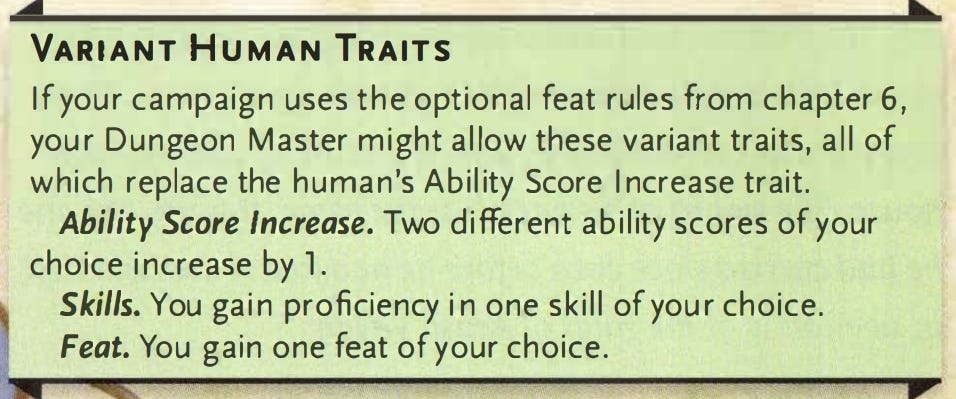
As mentioned earlier the ability score increase has been altered. All ability score increases have been reduced to a maximum of 1. Thus all 2’s will be 1, and 1’s will remain 1.
The Variant Humans will be the standard option for the sake of ability scores. There will be no feat selection though.
The Size of the Races is unaltered, however for the sake of weapons:
Dwarves are unable to utilize two-handed weapons other than Axes, Hammers, and Mauls.
Halflings are unable to use 2 handed weapons. Weapons with the Versatile property must be welded with 2 hands.
CHAPTER 3: CLASSES
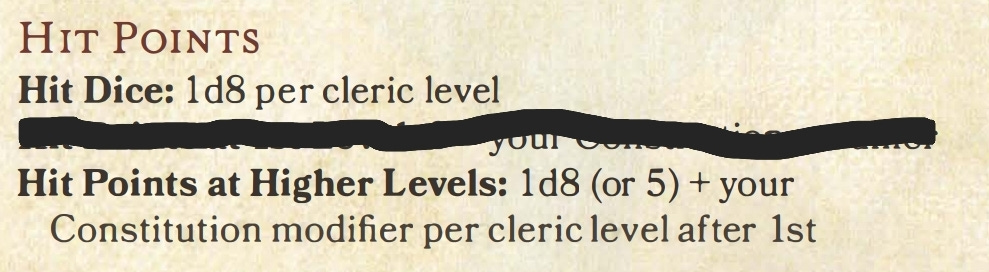
As stated earlier, we will be rolling starting HP at level 1. So for example, if you pick Cleric, you will be rolling 1d8 at level 1.
A recommendation when approaching the skills in the class section, roll them randomly. This will greatly speed up Character Creation. If you get the same skill twice, add an additional +1 to that skill when rolled in the game.
All abilities and features of the standard classes will be the same, aside from the exceptions below.
Cantrips per day will be limited to the spellcasting ability modifier of the class. As an example: if you have +3 as your modifier, you will only be able to cast 3 cantrips total for the day.
Spell Save DC = 10 + proficiency + spellcasting ability modifier. (Use this same formula for the Maneuver Save of the Battle Master.)
As an option for the DM to decide, I suggest rolling randomly for the class starting spells. This also speeds up the character creation process. I prefer to start this way. When leveling up, the player can decide on what new spells they want.
Paladins do not have the ability to cast spells until they take their Oath at 3rd level. (It is highly recommended that Paladins must be Lawful Good. All others must be Oathbreakers.)
The Expertise of the Rogue grants Advantage (+2) to the skills chosen.
CHAPTER 4: PERSONALITY AND BACKGROUND
Alignment will remain largely unchanged, however as mentioned earlier Alchemic Raker has done some work on class limitation with this.
The languages on page 123 are useful if you want to roll randomly for starting languages
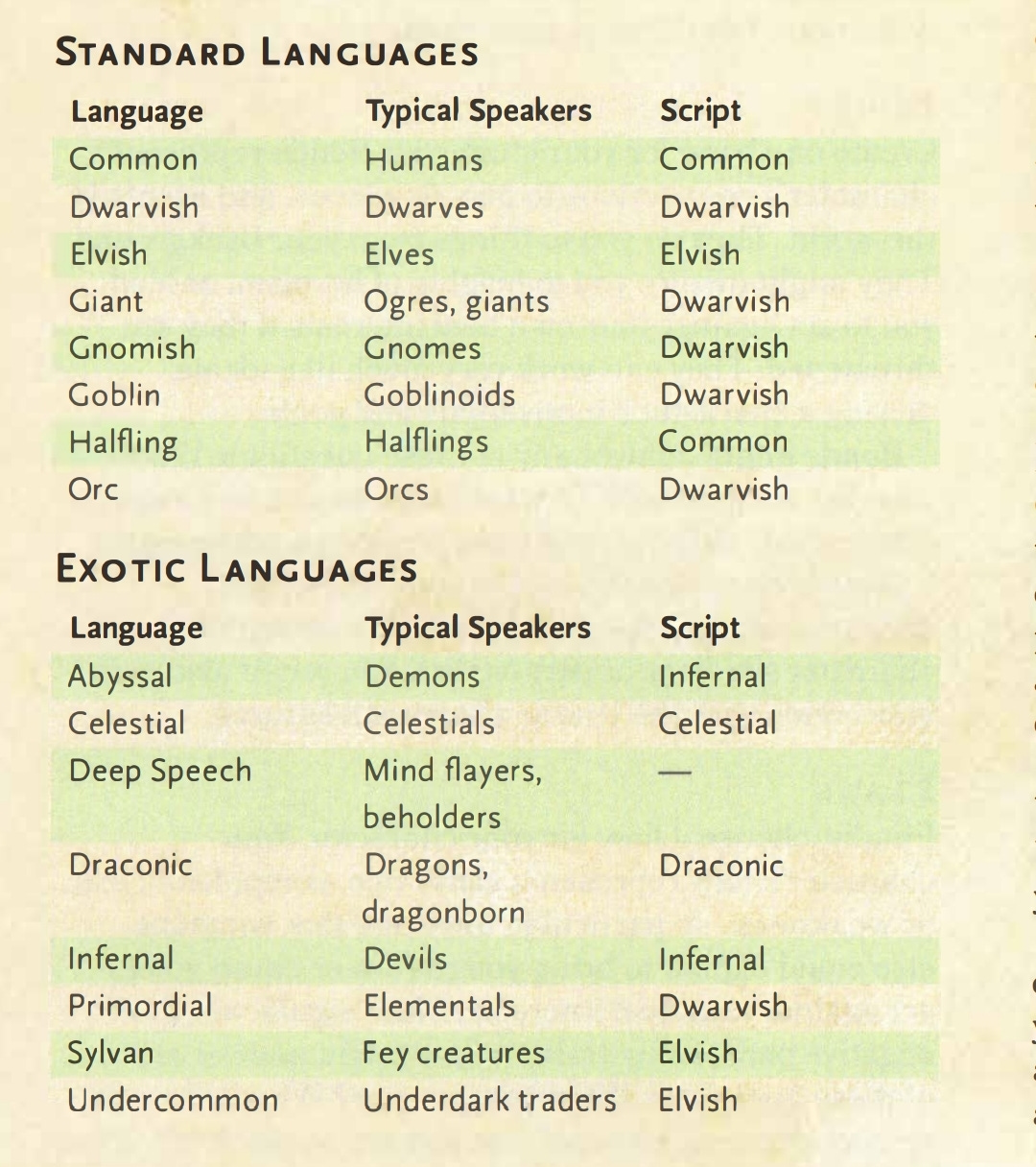
The technique you could use for this, is to only roll on the standard language chart, unless a duplicate comes up, then you would roll on the exotic languages. For example, everyone already knows common, so a roll of 1 on the d8 would mean a reroll on the exotic chart.
As noted earlier, I recommend rolling randomly for starting background. However, even if you don't. The background will not grant you more starting languages. I typically do not play with the background granting equipment either. The gold gained from the background is fine, however.
CHAPTER 5: EQUIPMENT
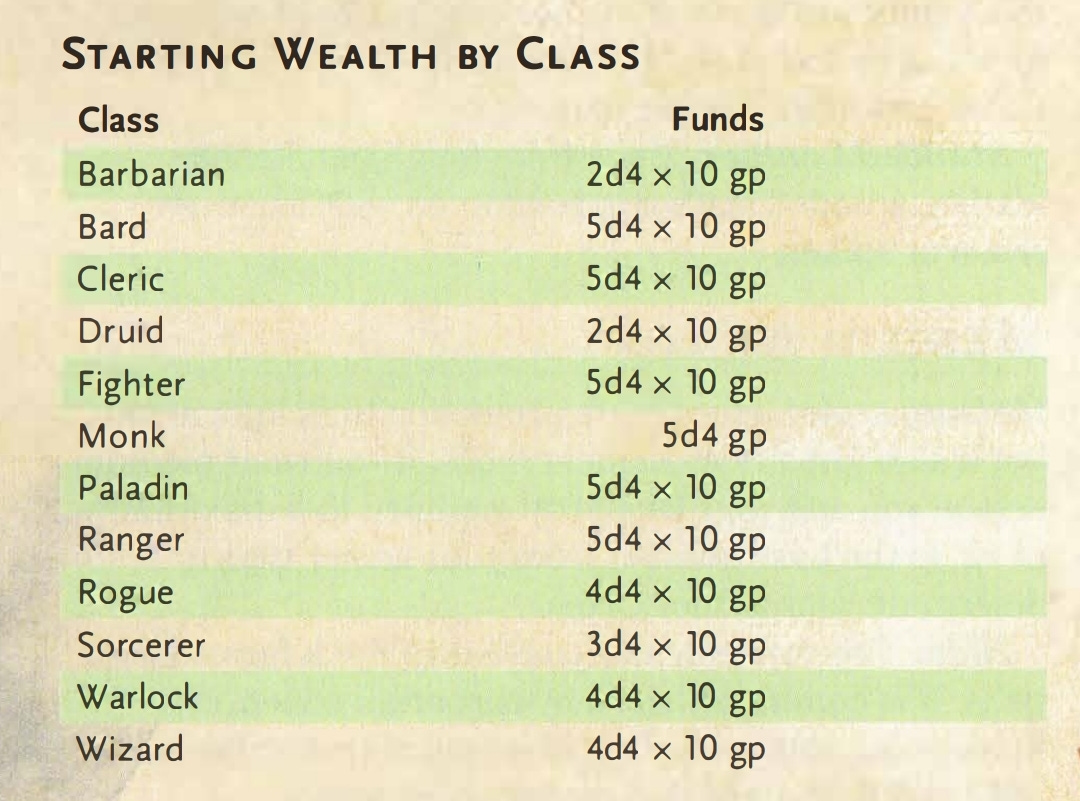
In this chapter, you will see the Starting Wealth by Class chart as mentioned earlier
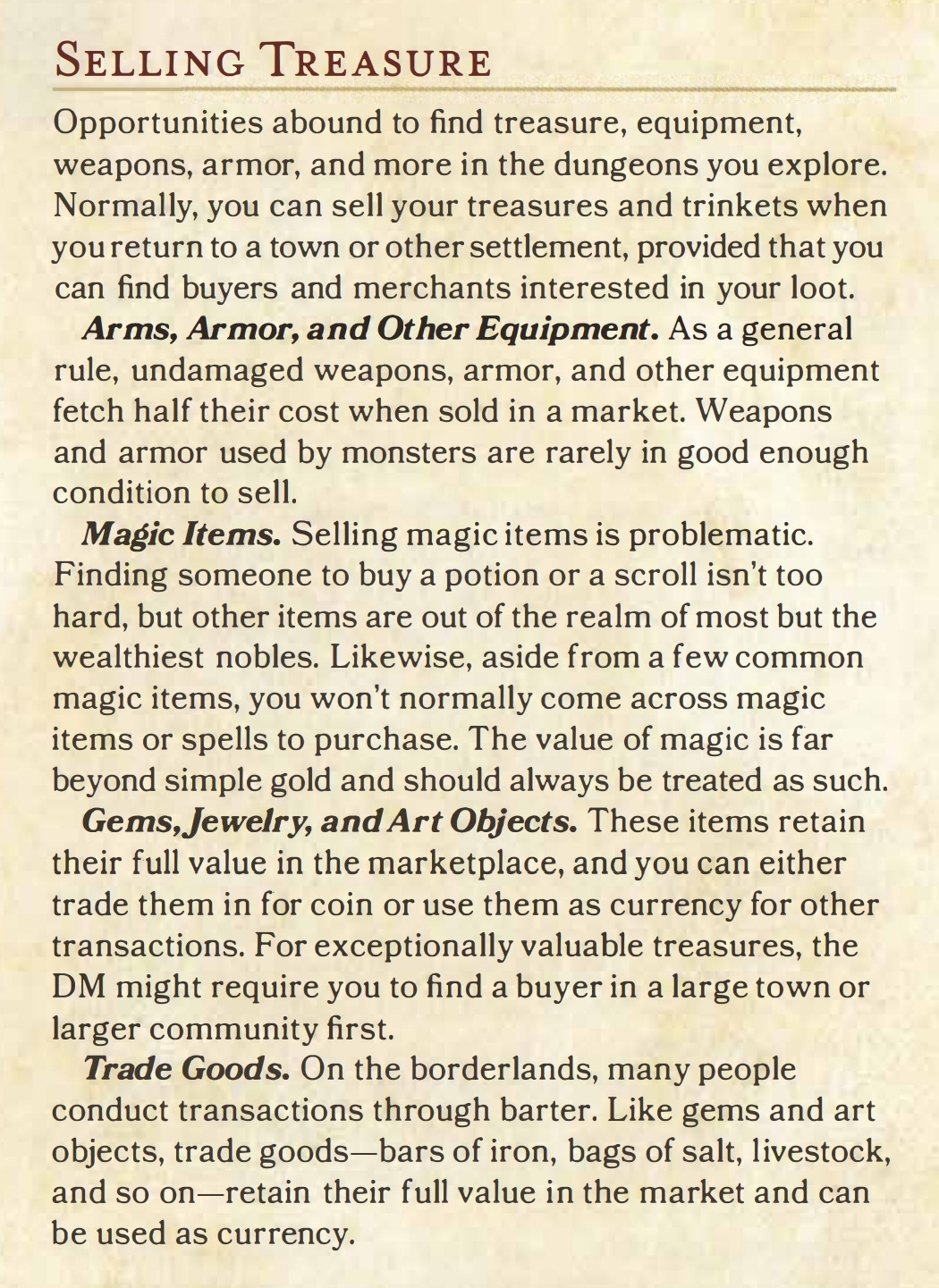
Some stuff to take note of in this chapter is the Selling Treasure section on page 144. Selling Magical Treasure, Gems, and Jewelry will grant XP. (But only upon re-entering town after adventure)
The Variant Equipment Sizes is something to keep in mind when discovering magical equipment in the dungeon. I recommend playing with the Variant.
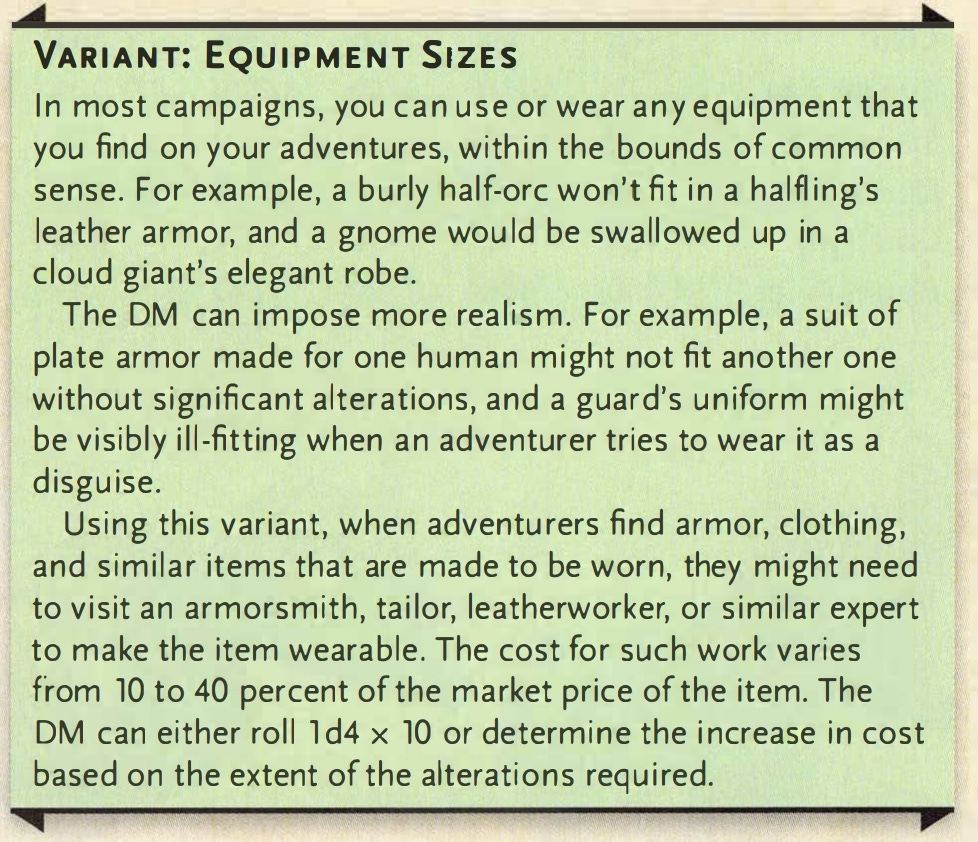
Depending on how common or uncommon Dwarves, Halflings, Elves, and others are in your campaign should inform you on how to randomly determine the size of found armor during an adventure.
When purchasing equipment, it is very important to keep track of the weight. This will come into play with Encumbrance. So make sure you write down the weight.
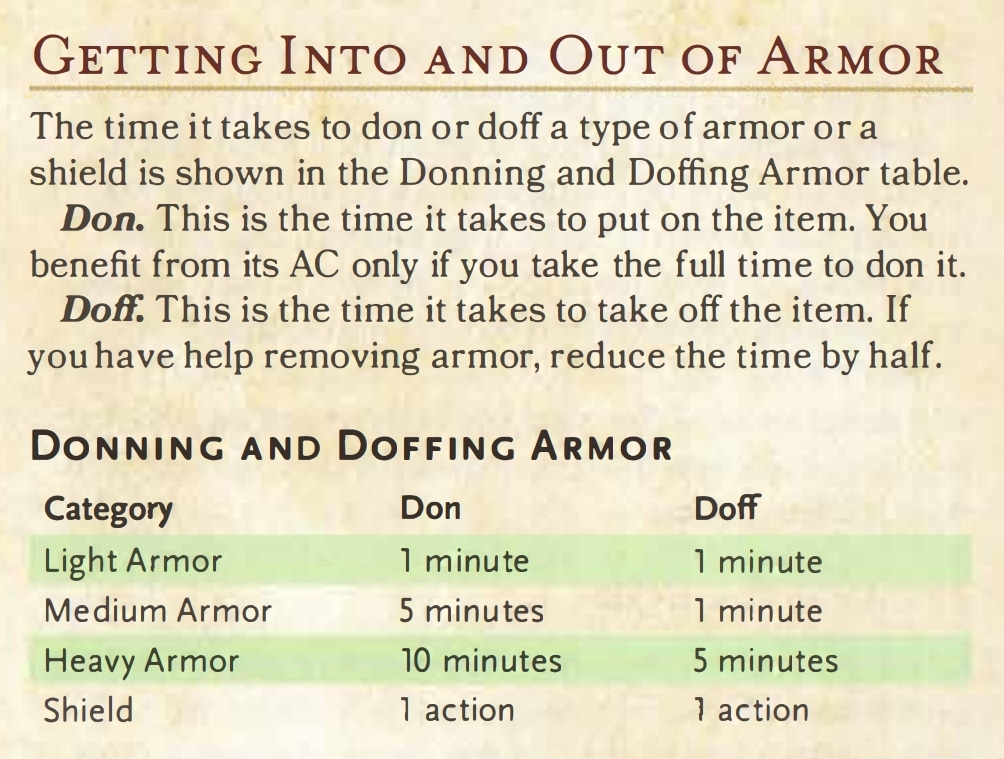
Donning and Doffing Armor on page 146 becomes relevant when used in conjunction with the rule that you cannot Long Rest in Medium or Heavy armor. This means that Random Encounters at night become way more of an issue.
Weapon proficiency, as noted earlier, all proficiency is treated as -2 the original bonus number. If a character without proficiency would use a weapon they are not proficient in, it would result in a -2 penalty to the roll.
Take note of the weapon properties when buying your equipment, this will come into play during combat. Make sure you write them down.
As noted before, Finesse weapons do not add the Dexterity Bonus to the Damage Roll. If a character opts to attack with Finesse they may add their Dexterity Bonus to the Attack Roll, but they cannot add any Ability Modifier to the damage.
When purchasing Equipment, it is discouraged to buy the Equipment Packs unless you are pressed for time.
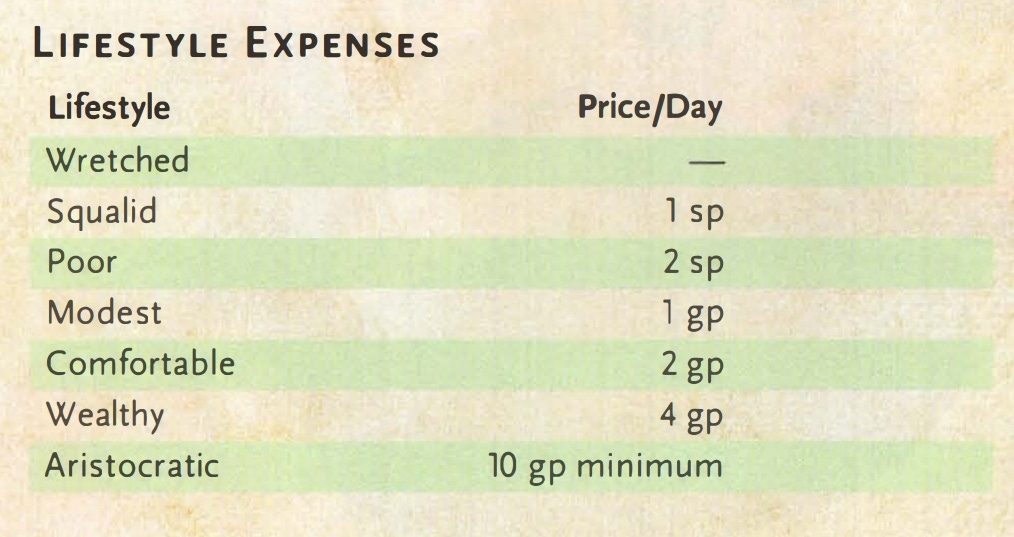
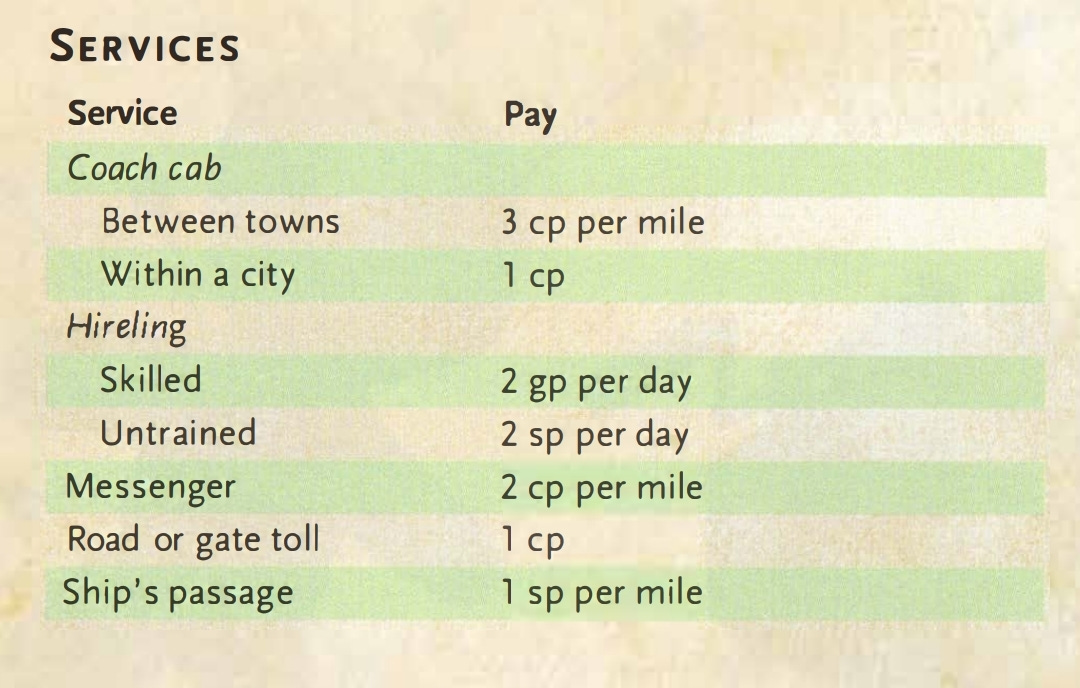
On page 157, it is important to take note of the Lifestyle Expenses. This will go hand in hand with Strict Timekeeping.
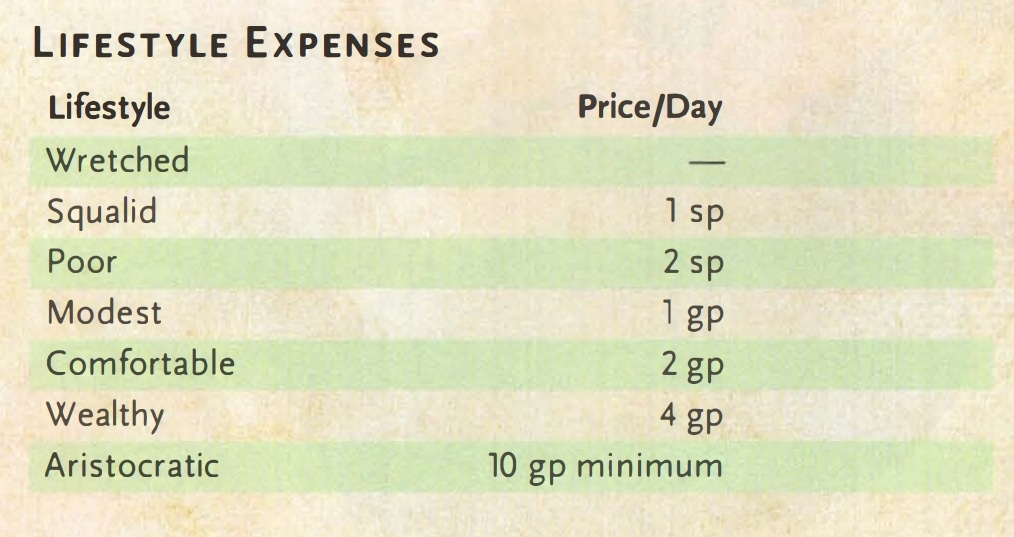
Notice how these expenses are per day. So while time is moving forward away from the table, the adventures are spending money.
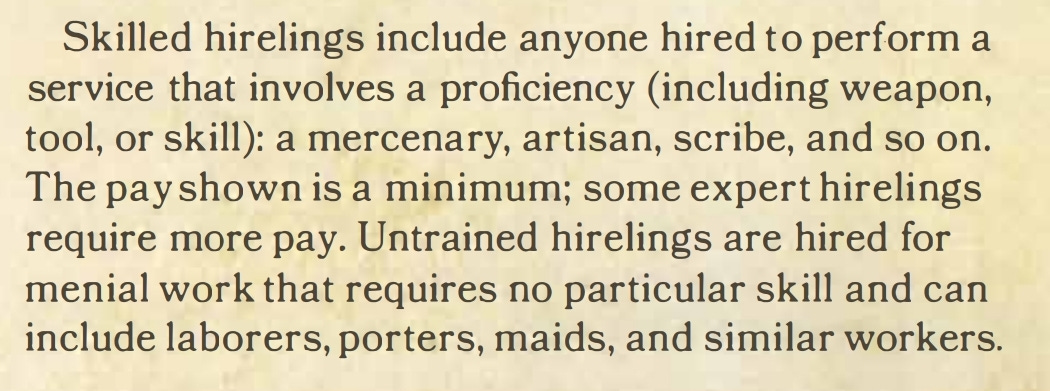
On page 159, you will find the rules and costs associated with Hirelings. It is highly recommended that you meditate on this.
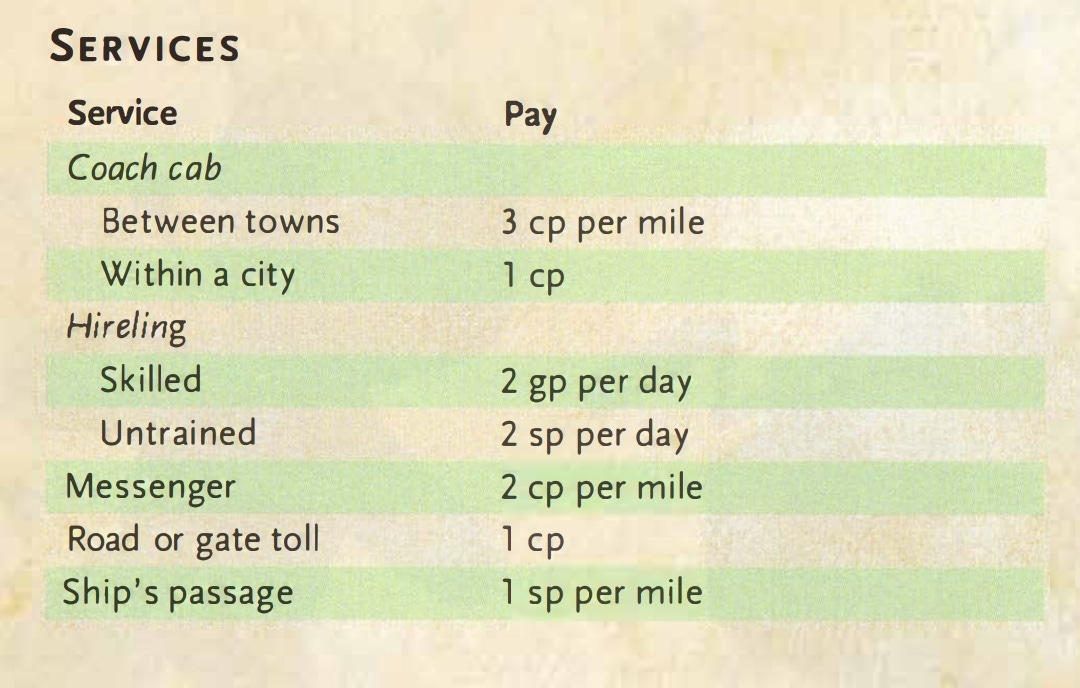
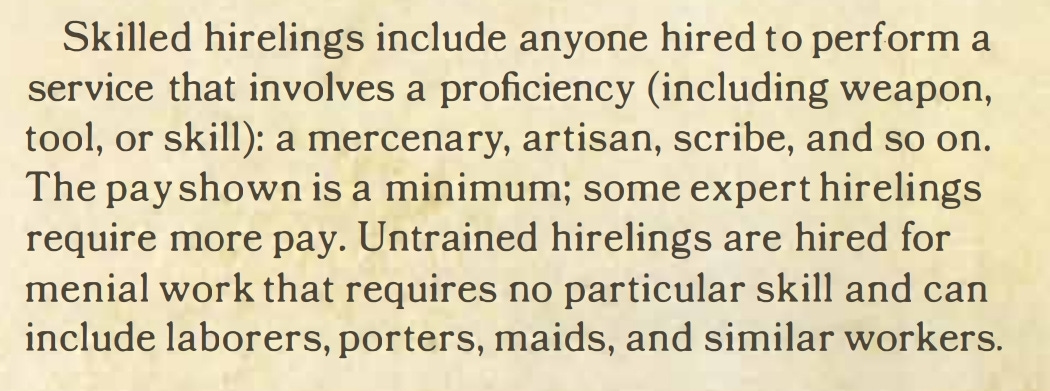
We will talk more about the hiring process in a future article.
CHAPTER 6: CUSTOMIZATION OPTIONS
We will not be using Multiclassing. The reason for this, is that subclasses already exist, and serve the purpose that multiclassing served in the original games. For examples, see Eldritch Knight, or Arcane Trickster.
We do see the Ability Score minimum chart on this page (163) though, and you may have opted to use that for requirements to choose that class in the character creation process.
We will not be using Feats for this hack. The purpose of this article is to produce a different 5e experience, not rehash the same one over and over. Hence, we are removing feats.
PART 2
CHAPTER 7: USING ABILITY SCORES
Advantage/Disadvantage as noted earlier is considered +2/-2 and has the ability to stack with other Advantages/Disadvantages.
We will discuss this more at a different time, but it is stated on page 173 that monsters also use proficiency bonuses. So that is worth keeping in mind when playing the game.
SKILL CHECKS
The Ability Checks section will remain unchanged, but I will make it a point to say that the DM will be the one to call for the use of a skill. My general thought process is, if someone is skilled, they might not require a check.
A good rule of thumb is that skills that require a check from a proficient character, can not be rolled for by those without proficiency. If a character without a proficiency has to roll for something, then the proficient character can probably do it without a roll at all. This isn't an absolute rule, just a guideline.
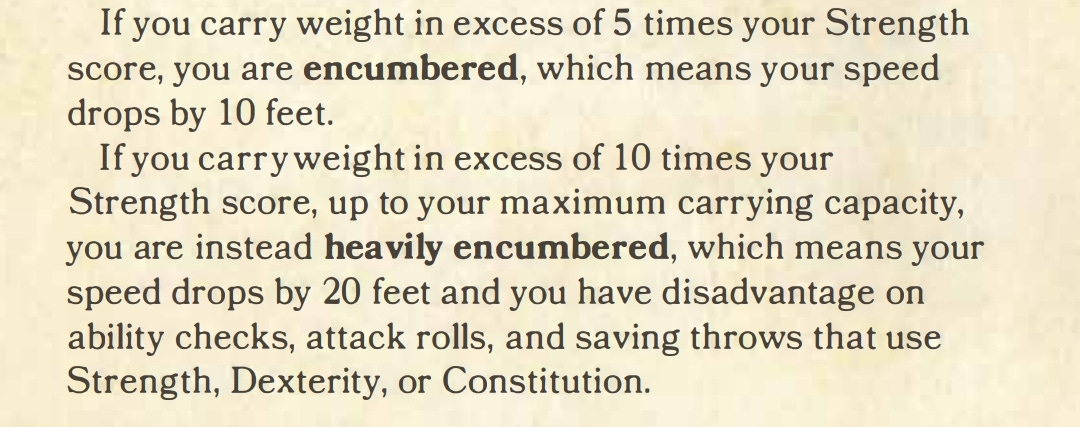
ENCUMBRANCE
We come to Encumbrance on Page 176 finally. These rules will remain the same, except the disadvantage rule that applies to heavily encumbered will apply to regular encumbered, and you will gain 2 disadvantages for being heavily encumbered
CHAPTER 8: ADVENTURING
TIME
We could go on a whole rant about time, however many others such as Jeffro Johnson have expounded upon this topic at great length, and I would do the topic a disservice to not recommend his work.
I will give the recommendation of keeping track of the days that occur in game, and applying that to the IRL calendar. When away from the table, keep track of the IRL calendar, and apply that to the in-game days.
Another option is to have time away from the table move at a pace of 2 days in game per 1 day IRL.
A final option if you really want to speed time up, is to have 1 week away from the table equal to 1 month in the game world.
I tend to use 1 day to 1 day. However, I will make note that I want to play more with the other variants.
Whatever you choose, stick to it and make time matter. This rule relates back to the Lifestyle Expenses on page 157, as well as any Expert Hirelings you may have hired on page 159.
A final thought about Time in combat, you can play where table talk happens in the game, and the monsters overhear the plans of the players. (And react if the players are being too slow.. this is subjective, so proceed with caution.) I, however, typically let the players plan for however long they want.
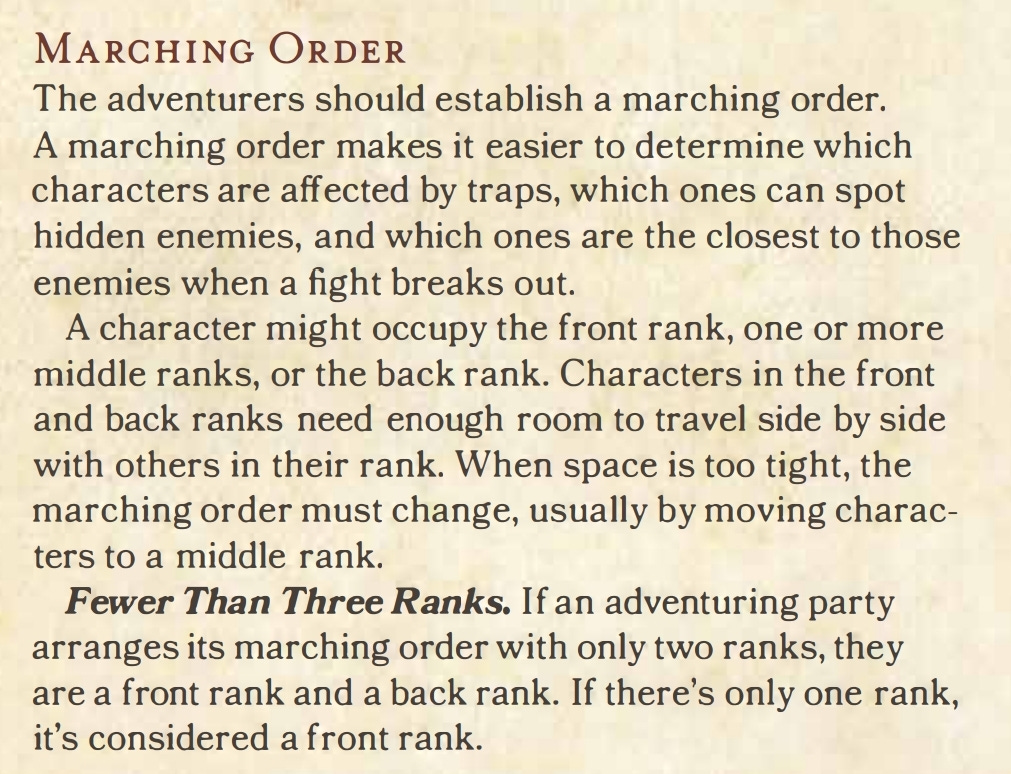
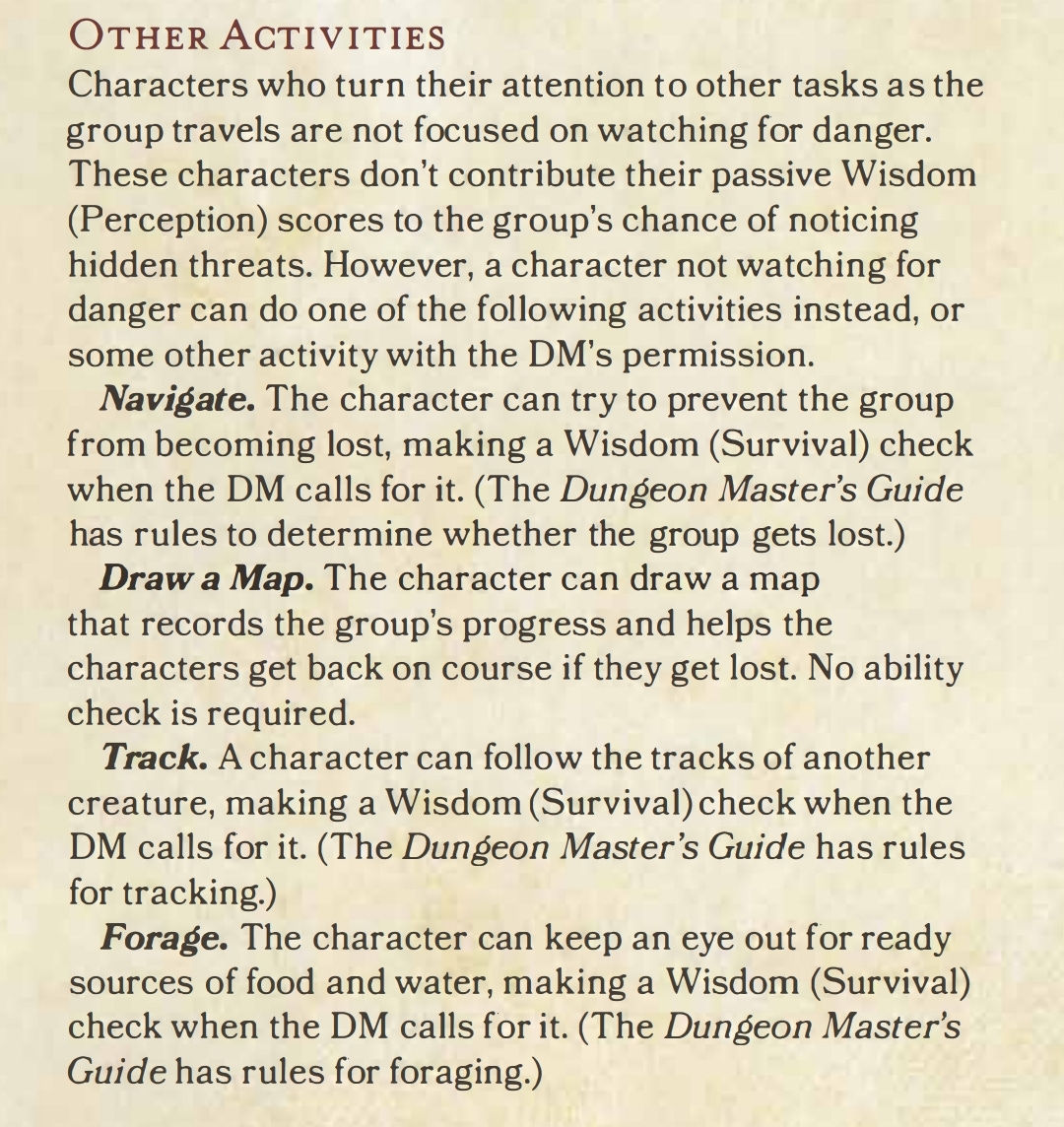
Some things to keep in mind on pages 182 and 183, Marching Order, Drawing Maps, and Foraging.
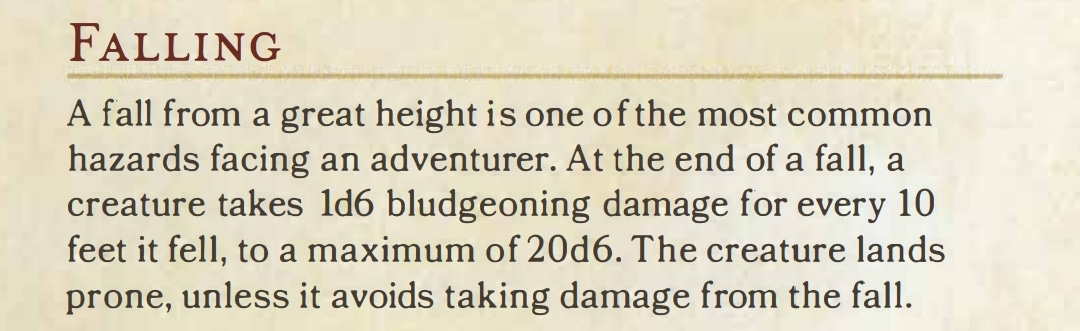
For the Falling rules on page 183, I recommend using them how they were initially supposed to be used in D&D. 1d6 accumulative for every 10 feet fell. For example, falling 20 feet would be 3d6 damage. (1d6 + 2d6)
Dark Vision, again, does not apply for the Races of Player Characters.
Finally on page 186, we come to another controversial rule alteration. RESTING.
Short Rests will gain you 1HP and no bonus from Constitution.
Long Rests will grant you 1HD + Constitution Modifier.
This change to resting is something that I feel is crucial to gaining the desired outcome that we are aiming to achieve with Fifth Edition.
At the end of Chapter 8, disregard the Training section. We will cover Training Rules in the Dungeon Master's article.
CHAPTER 9: COMBAT
In the following Chapter, I have purposely been verbose.
There will be many alterations in this section, but I feel it is necessary to change things for the sake of the feeling at the table. If you do not wish to learn a new Order of Combat, you are free to use the Group Initiative that we will discuss in the Dungeon Master's Guide.
When entering into an encounter, roll for the reaction if the reaction is unknown. We will discuss Reactions more in a future article.
Check for surprise at the beginning of every encounter.
To determine Surprise roll 1d6 per side. Surprise happens on 1 or 2 with 2 being the most surprised. The surprised party loses the round of combat, and may not act until after the first round is complete.
Combat Step by Step
Declare actions
Roll Initiative by Side
Stationary Missile/Melee
Movement
Missile
Spellcasting
Melee
Morale (if applicable)
After both sides have completed their actions, start back at step 1 and repeat.
This may seem like a big change for many, but once attempted, you will quickly find out that it is very easy to grasp.
Before rolling initiative, the players must declare their actions. After actions are declared, 1 player rolls a d6 for their entire side, while the DM rolls a d6 for the monster's side. If a tie occurs, the combat is simultaneous. Keep in mind that the round is only 6 seconds and the characters must stick to their declared actions. A Dash into a Charging attack may also be declared here. (This is normally gatekept behind a feat, which is moronic.)
Characters who decide to remain stationary will attack first, and this happens before any movement. Stationary Missile attacks gain +1 to hit.
Movement happens and the rest of the combat follows. (Charge happens here.) Charges may only be conducted by those with piercing weapons. Conversely, as a reaction, characters with ranged weapons in hand may shoot at the charging character, and characters with piercing weapons may set vs charge. The successful charge attack and/or set vs charge adds an additional damage die to damage.
During the first round of Melee Combat, when the combatants are entering into the range of each other. The longest weapon will get to attack first, even if initiative was lost. To determine what is longer use the weapon traits that I recommended you write down earlier.
Reach - Two Handed - Versatile - Regular - Light
The longest weapon will be on the left, and the shortest on the right.
Small Characters or Monsters treat the length of the weapon as 1 size down in length. Large Monsters treat the weapon length as 1 size up.
During simultaneous initiative, if a character is hit prior to successfully casting a spell, that spell is considered interrupted and the spell slot is lost.
In stationary combat, during simultaneous initiative, characters facing enemies wielding Versatile weapons or longer, gain 1 additional attack if they are only wielding weapons that have the properties “Light, Finesse”
In simultaneous combat, lower-level spells will be cast first, this comes up while wizards are dueling.
Morale will be covered more in-depth in the Dungeon Master's Guide, which will be released at a later date.
I know this is a diversion from traditional Fifth Edition combat, but you will find that everything will work as intended.
On Page 192, there is an option for playing on a grid. I just want to point out that you can play with miniatures and without a grid if you would like. Just translate 1” to 10 feet while inside, and 1” to 10 yards while outside.
Damage Rolls on page 196. I just want to reiterate that Finesse weapons do not have the added Dexterity bonus to Damage Rolls. The character prior to the Attack Roll may declare they are attacking with Finesse, if they do so, they add their Dexterity Bonus to the Attack Roll instead of the Strength Bonus. The damage on a successful hit does not add any bonus while using finesse.
DEATH
There is a lot to say about the way that Fifth Edition handles Death Saves and the characters reaching 0 hit points (or less).
I will offer a few different options to consider.
Death at negative HP equal to Character Level + Constitution Modifier.
Death at -10. Bleeding out 1hp a round.
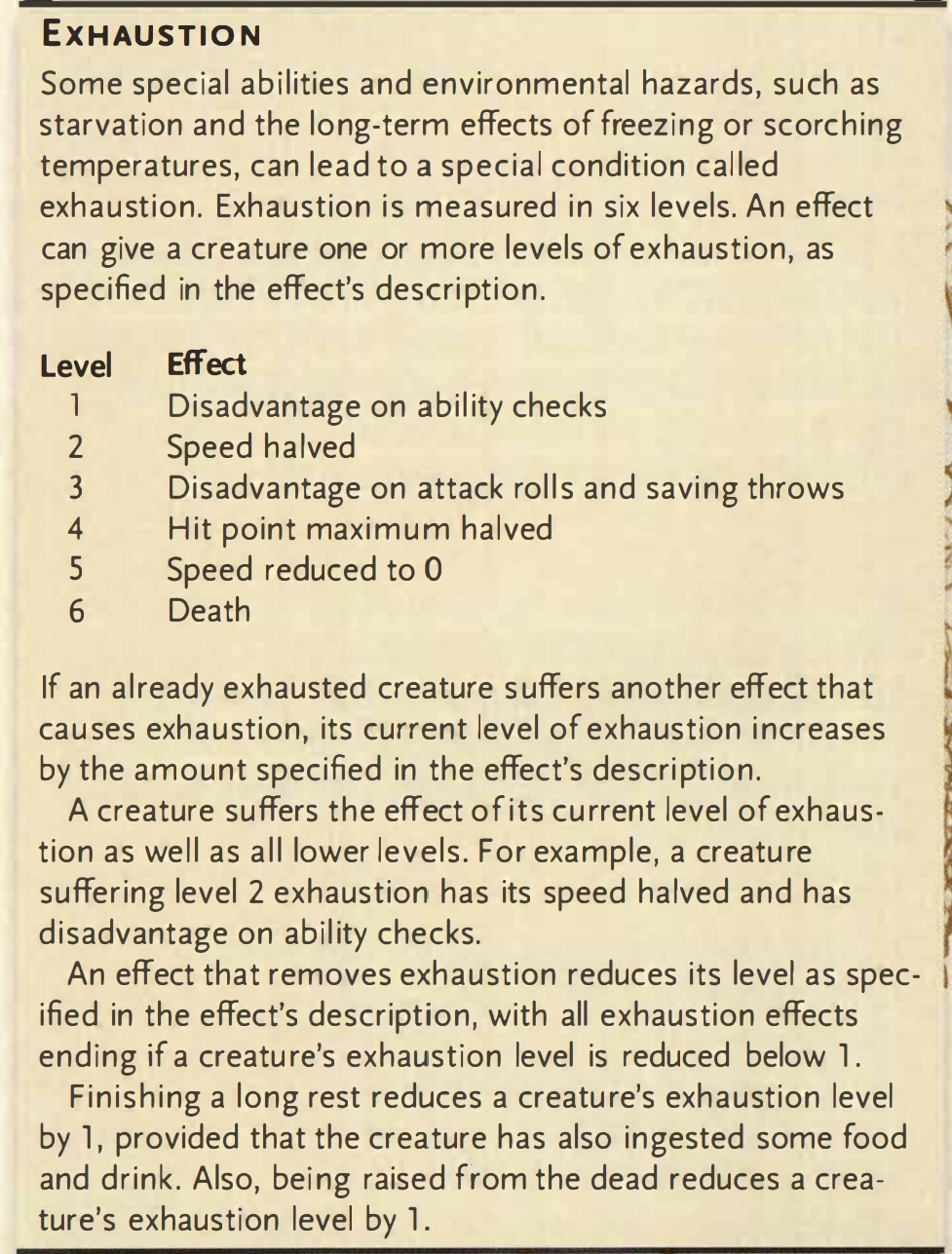
Death Saves like standard Fifth Edition, but dropping to 0 HP causes 2 levels of Exhaustion.
In these variants, dropping to negative HP or 0 will require a week or more of resting for the character to fully recover. Use this in conjunction with Strict Timekeeping.
If using method 3, consider making the Death Saves in private on a dice rolling app. That way the other players will not know any metagame knowledge on when to heal the character.
A character in negative HP can become stabilized, and stop bleeding if they are not -5 or below. If a character is stabilized in negative HP, that character will remain in a coma for as many days as they are in the negative. Even with magical healing they will remain in a coma. For example, Beefbus goes to -3 HP. He becomes stabilized. He will remain asleep for 3 days, even if healed to full health.
Regardless of what you choose, the outcome will be improved. I have typically used method 2.
CHAPTER 10: SPELLCASTING
Spellcasters must prepare the spells each morning before they are able to be cast. This is true for all spellcasters in this version of the game.
Cantrips are mentioned here on page 201. Like mentioned previously, Cantrips are limited to the spellcasting ability modifier of the caster. A +3 will mean that only 3 cantrips total will be able to be cast that day.
On page 203, Components and The Schools of Magic are mentioned. How in-depth you want to be with these topics is entirely up to you. I just felt the need to draw your attention to the text. There are plenty of Roleplay and Adventure opportunities baked into the game if these structures are recognized.
On page 205 Saving Throws are once again mentioned. The DC formula for the save is 10 + Proficiency Bonus + special mods.
CHAPTER 11: SPELLS
I will not have a lot to say here. I just want to once again recommend rolling randomly for starting spells. It is not a requirement for this style of gaming, but it is something that speeds up character creation.
APPENDIX A: CONDITIONS
I just want to point out that the Exhaustion rules are here if you are using that variant of Death Saves. Page 291.
APPENDIX D: CREATURE STATISTICS
A few things to note: Hit Points, Proficiency, and Finesse. We will discuss monsters more at a later date.
We will roll for Monster Hit Points and ignore the Constitution bonus. A monster with 2d8+4 will only have 2d8.
Keep in mind that monsters also have -2 to proficiency while looking at these statistics. It does not seem to always line up correctly however. In the previous game I worked on, I had a different method for addressing this, and I may discuss that at a different time if people want it.
A safe rule of thumb is to just subtract 2 from the Attack Roll.
I will use the Skeleton on page 310 as an example. The Skeleton gets +4 to attack and has +2 damage. However if we apply our rules, you will notice that the Strength of the Skeleton is +0. So it is attacking with Finesse. This means that the skeleton will attack with +2 to the Attack Roll (from Dexterity Bonus) and add +0 to the damage roll.
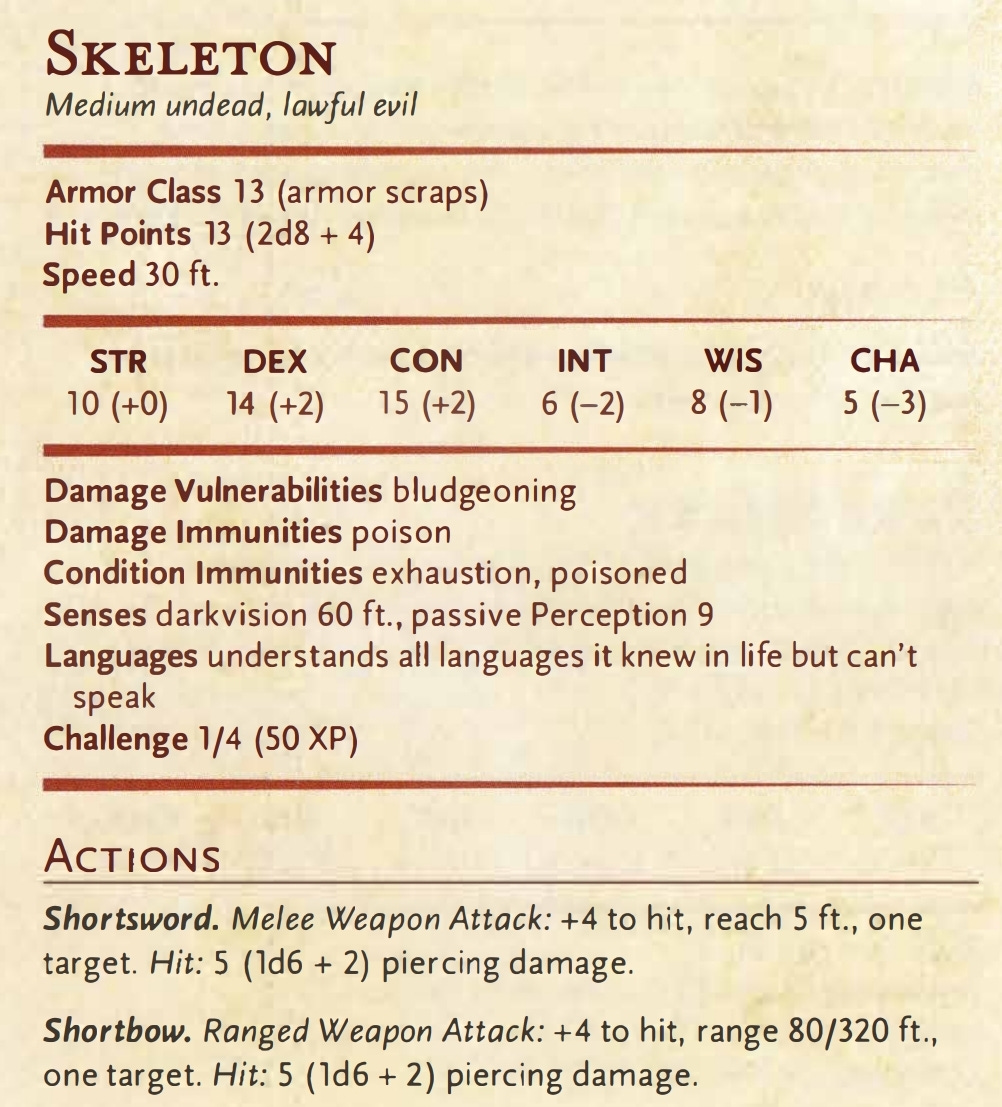
If the skeleton would attack with the Shortbow it would get +2 on the attack and +2 for the damage.
Something else to point out here on page 310. Warhorse Armor?. Funny place to have it.
APPENDIX E: INSPIRATIONAL READING
I would not be a bro if I didn't shout out Jeffro Johnson here and recommend his book Appendix N.
With Appendix E I will quickly glance through here to see what I personally recommend.
Poul Anderson, Leigh Brackett, Edgar Rice Burroughs, Lin Carter, L Sprague de Camp, H.P. Lovecraft, Lord Dunsany, Robert E Howard, Fritz Lieber, A.Merritt, Michael Moorcock, Clark Ashton Smith, Tolkien, Jack Vance, Roger Zelazny.
I am sure there are many more good authors on that list on page 312. So look through it yourself.
Do not be illiterate.
WHAT COMES NEXT
Next I will look into the Dungeon Master's Guide. Then maybe Xanathar's Guide to Everything.
I just want to thank my friends for inspiring me and telling me to get this article off the ground. I hope you have found enjoyment in this.
Too many to name.
Christ is King. Without Him, none of this would have been possible.
Really love to see this written up! I think with just a few tweaks and the right mindset, a large amount of 5e content is perfectly serviceable for old school campaigns, there's a lot of mileage to be had with just the three core books + XGE..
At your recommendation I've been using many of these same rules in my own campaign and seen the positive results from them first-hand. The combat changes (announcing actions and rolling side initiative) alone is easily implemented, and it's an absolute game changer.
Definitely looking forward to the DMG and XGE articles!
I greatly enjoyed this post. I have a lot of questions about gold and economics if you are willing to discuss.
To start, 1 gp = 1 xp. What have the adventurers spent their gold on?